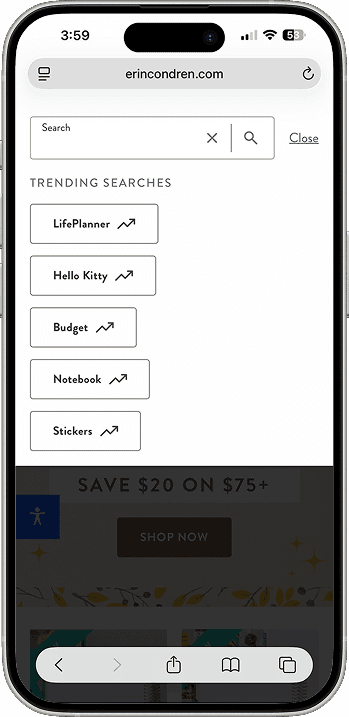
A New Search Experience
Project Overview
Most of Erin Condren's customers were shopping on mobile, but the search experience was built for desktop and hadn't been touched in years. It was utilitarian, hard to use on a small screen, and missing features that drive discovery and conversion in modern e-commerce. I led the end-to-end redesign from research through launch.
Problem
Unresponsive, outdated site search experience that wasn't optimized for conversion & various paths.
My Role
End-to-end Product Designer
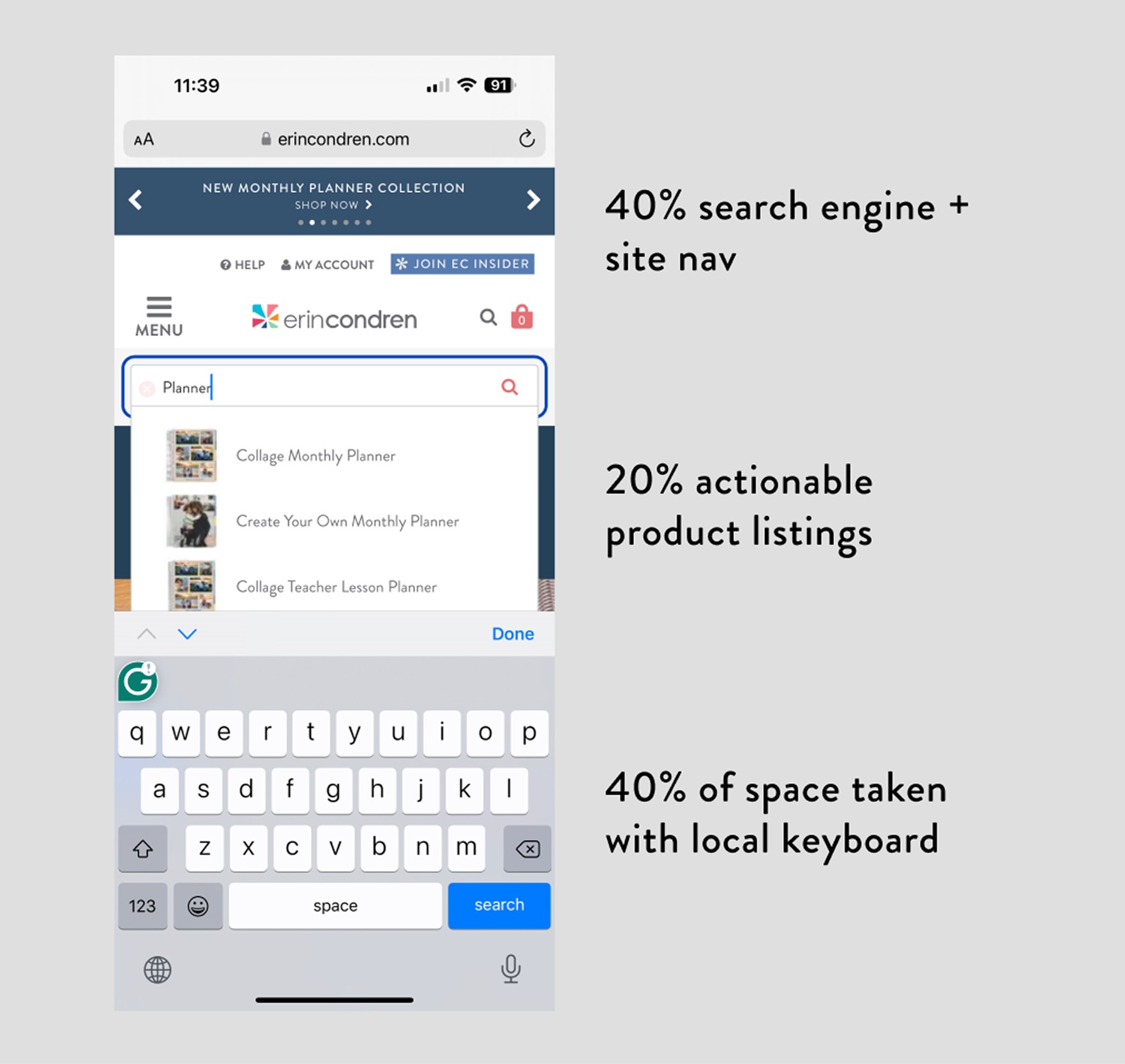
Not Optimized for Mobile
The search experience was built for desktop, not the mobile shoppers who made up the majority of traffic. No trending searches, no category surfacing, no fallback for empty results. For a brand with proprietary product names, that left new customers with nowhere to start.
Validating Ideas With Usability Testing
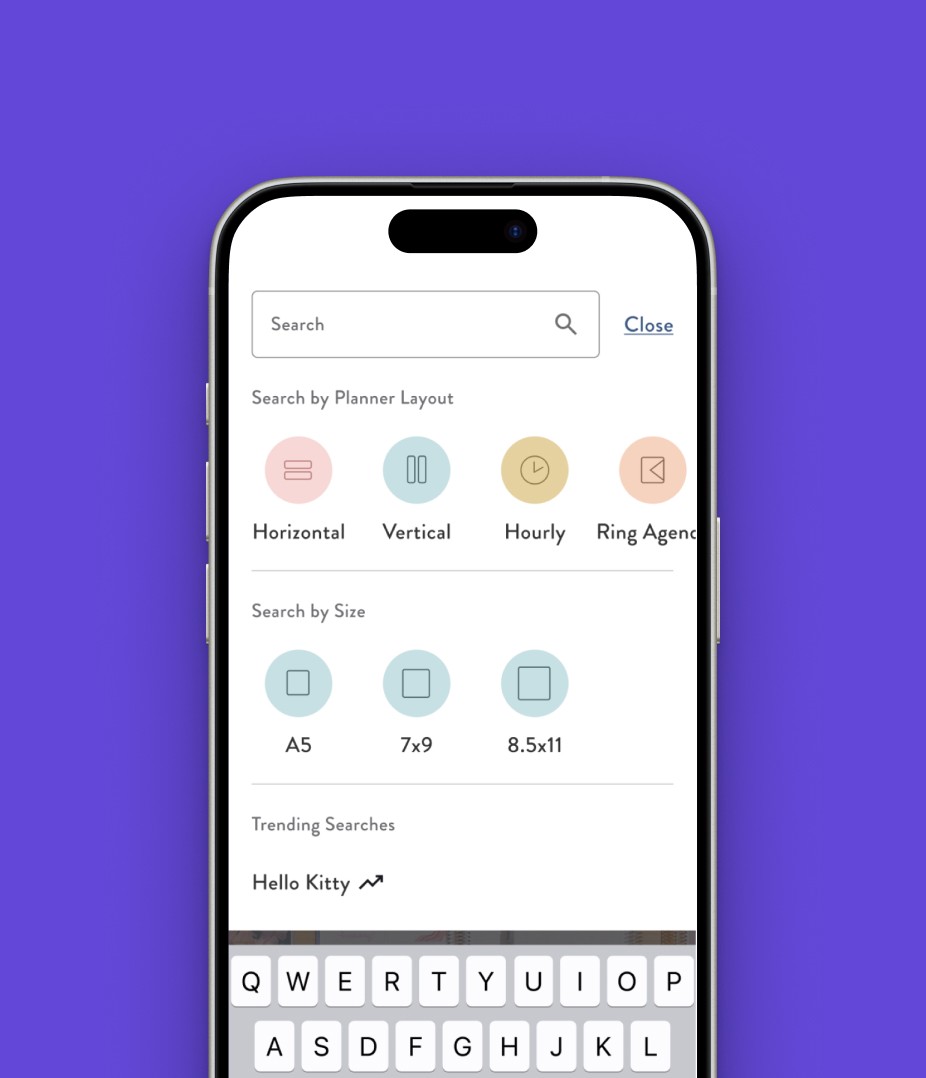
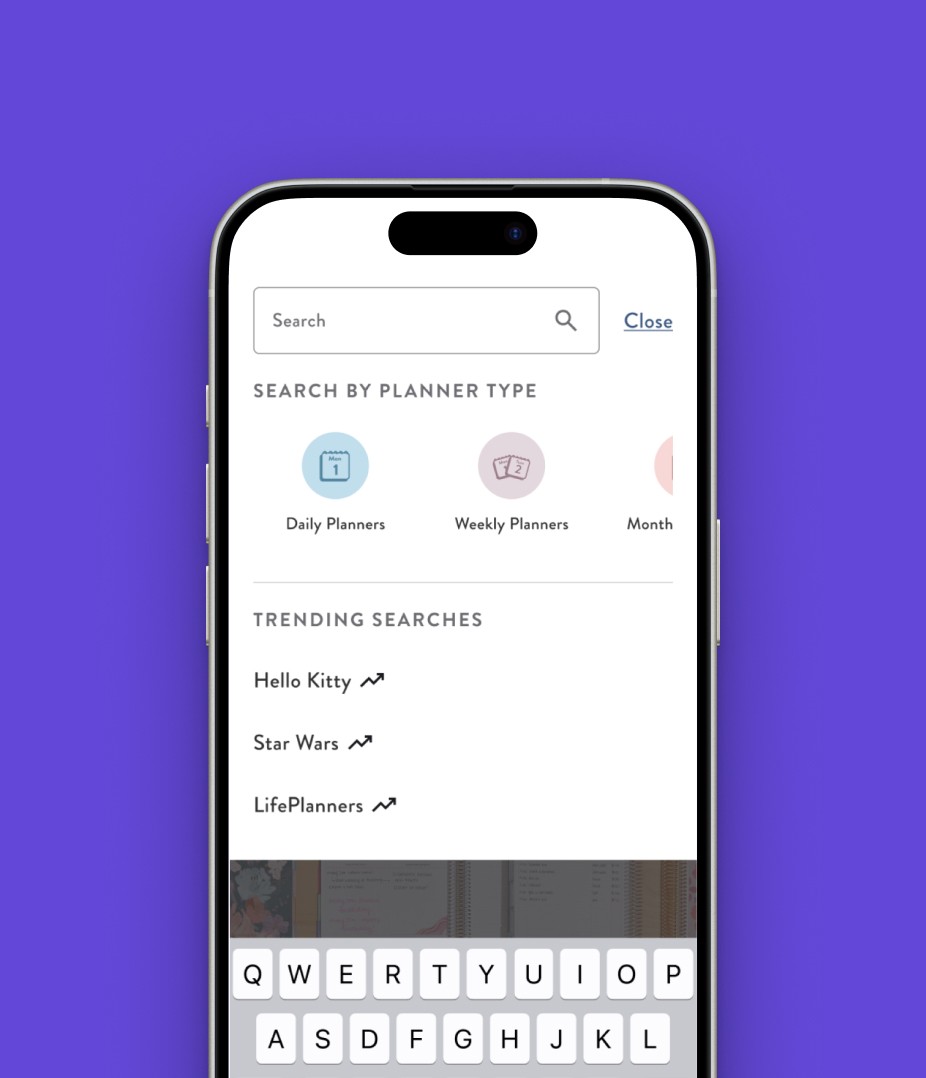
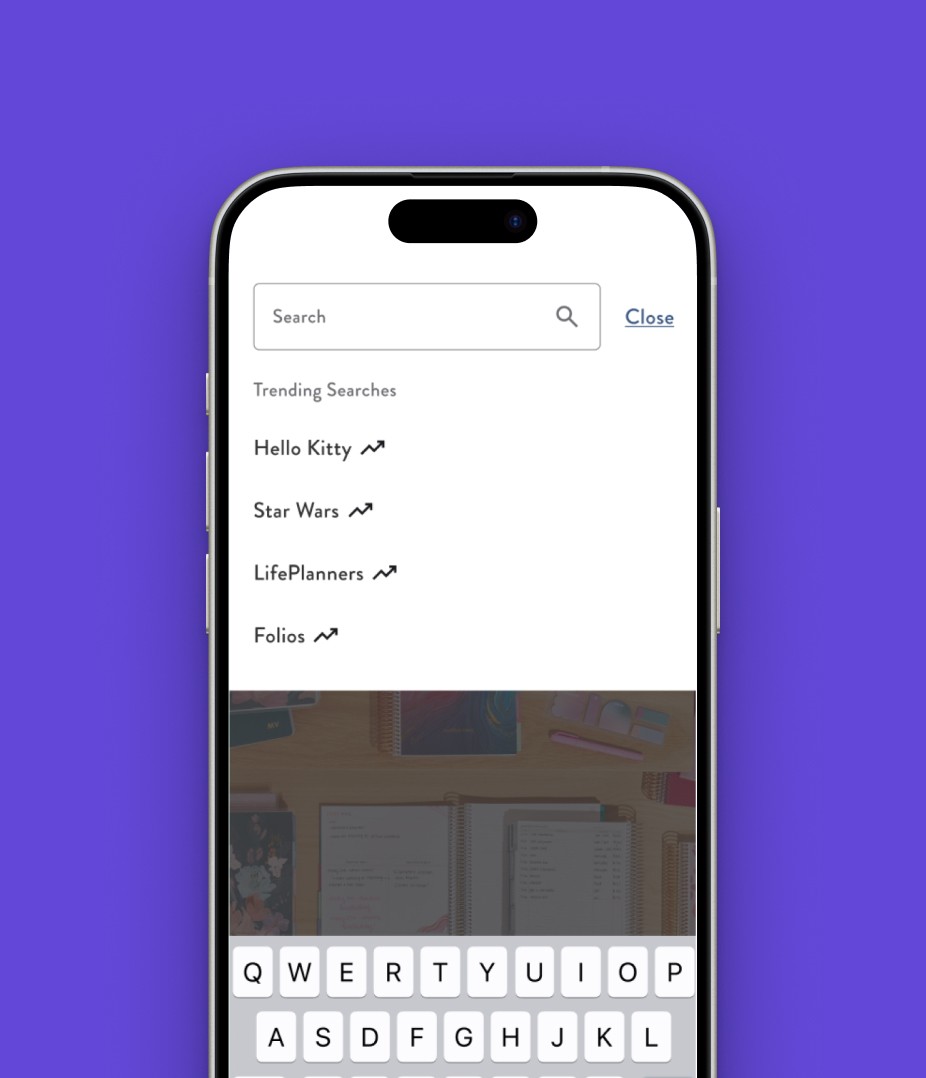
Three external customers. Figma prototypes. Each tested all three search open states on mobile since that was the largest structural change to the UX. Tight timeline and budget made recruitment a challenge, but the sessions produced clear signal.
What I Did & Why
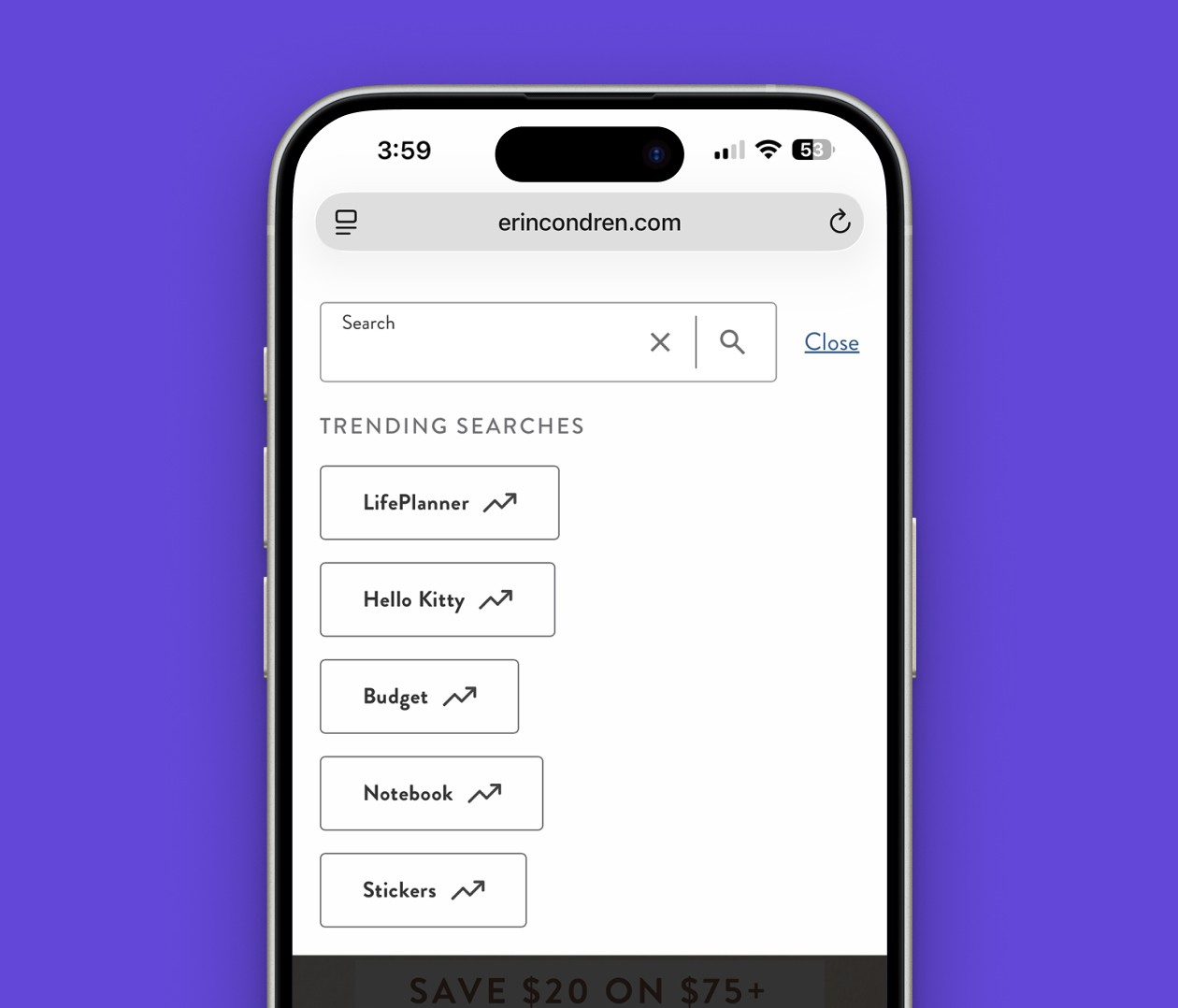
Added Trending Searches
A/B data and competitive research both pointed to social proof as a conversion driver. Trending searches gave uncertain users a starting point and surfaced best sellers to customers browsing without clear intent.
Real Time
Category Matching
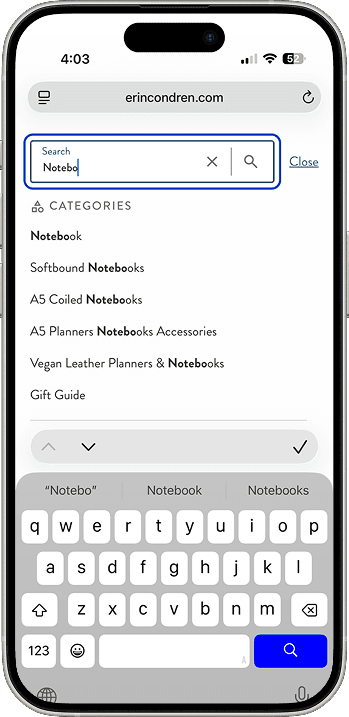
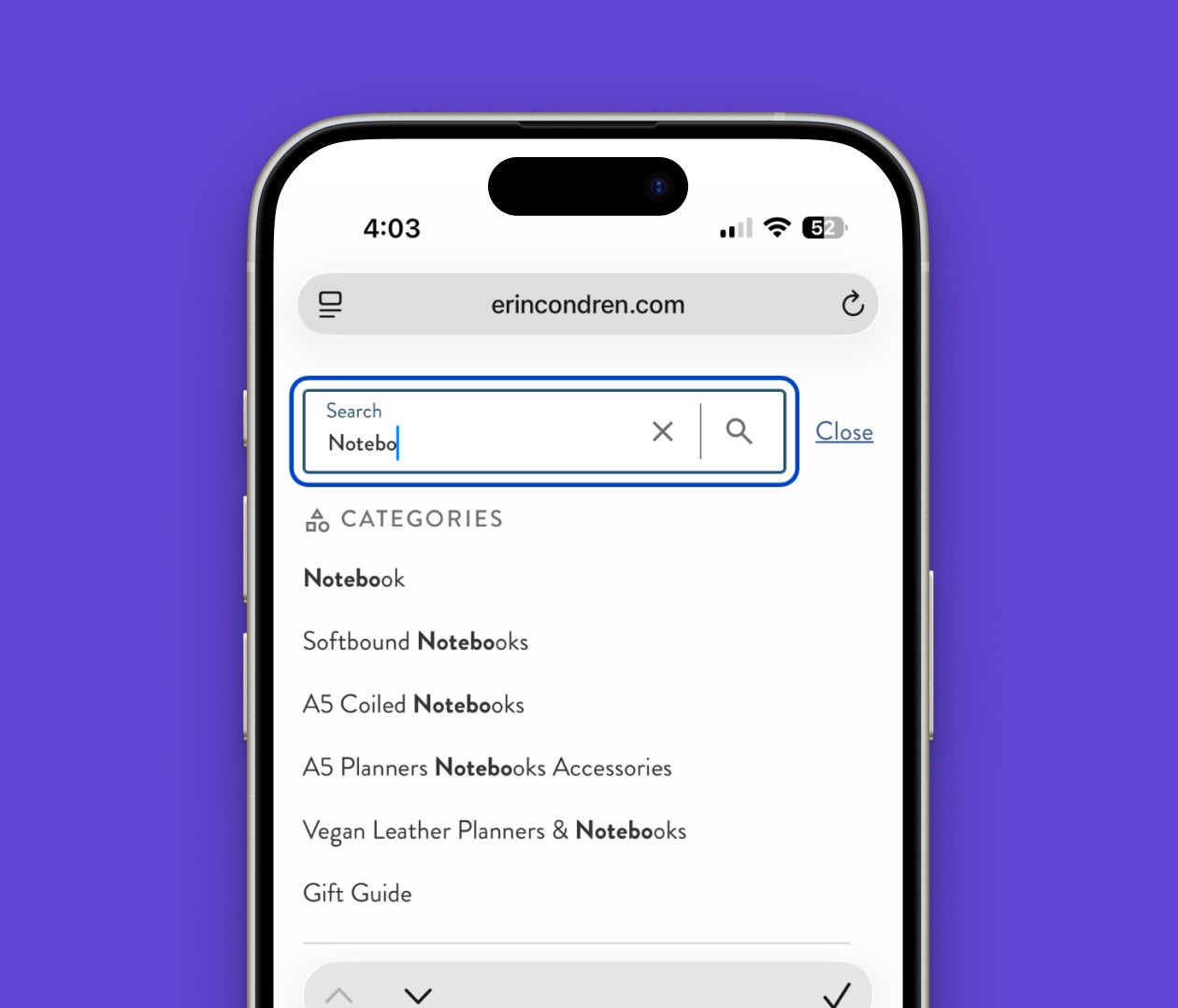
As users typed, relevant categories surfaced above results. A direct response to the naming convention problem: customers who don't know the difference between a Softbound Notebook and an A5 Coiled Notebook can navigate by category rather than guessing the right term.
Unhappy Paths
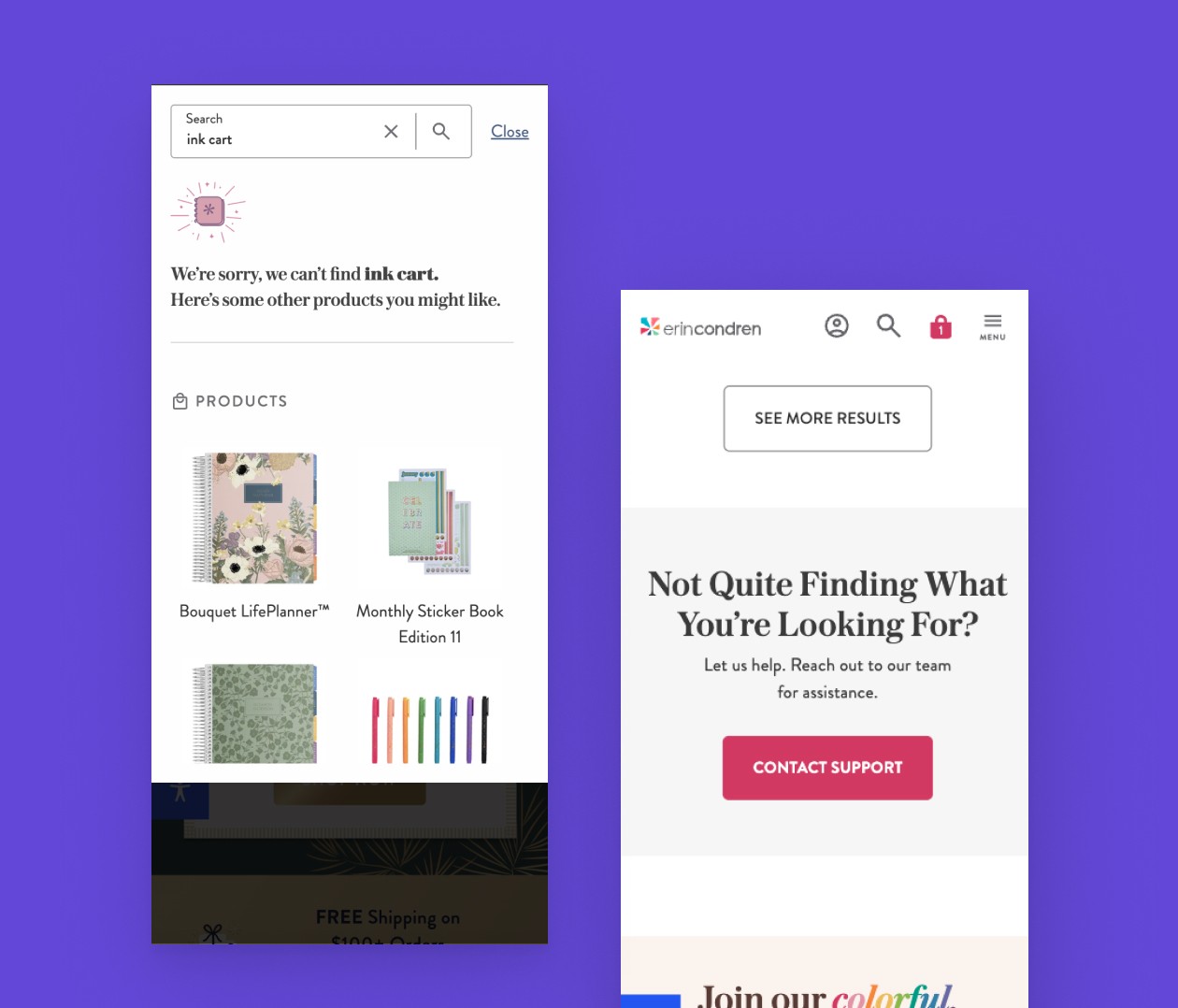
Zero-results states previously showed nothing useful. I added contextual copy acknowledging the mismatch and surfaced best-selling products as a fallback, keeping users in the shopping flow.
A known limitation was that the search logic couldn't intelligently match users to complementary products for a given mismatch. That's the first thing I'd address in a future iteration.
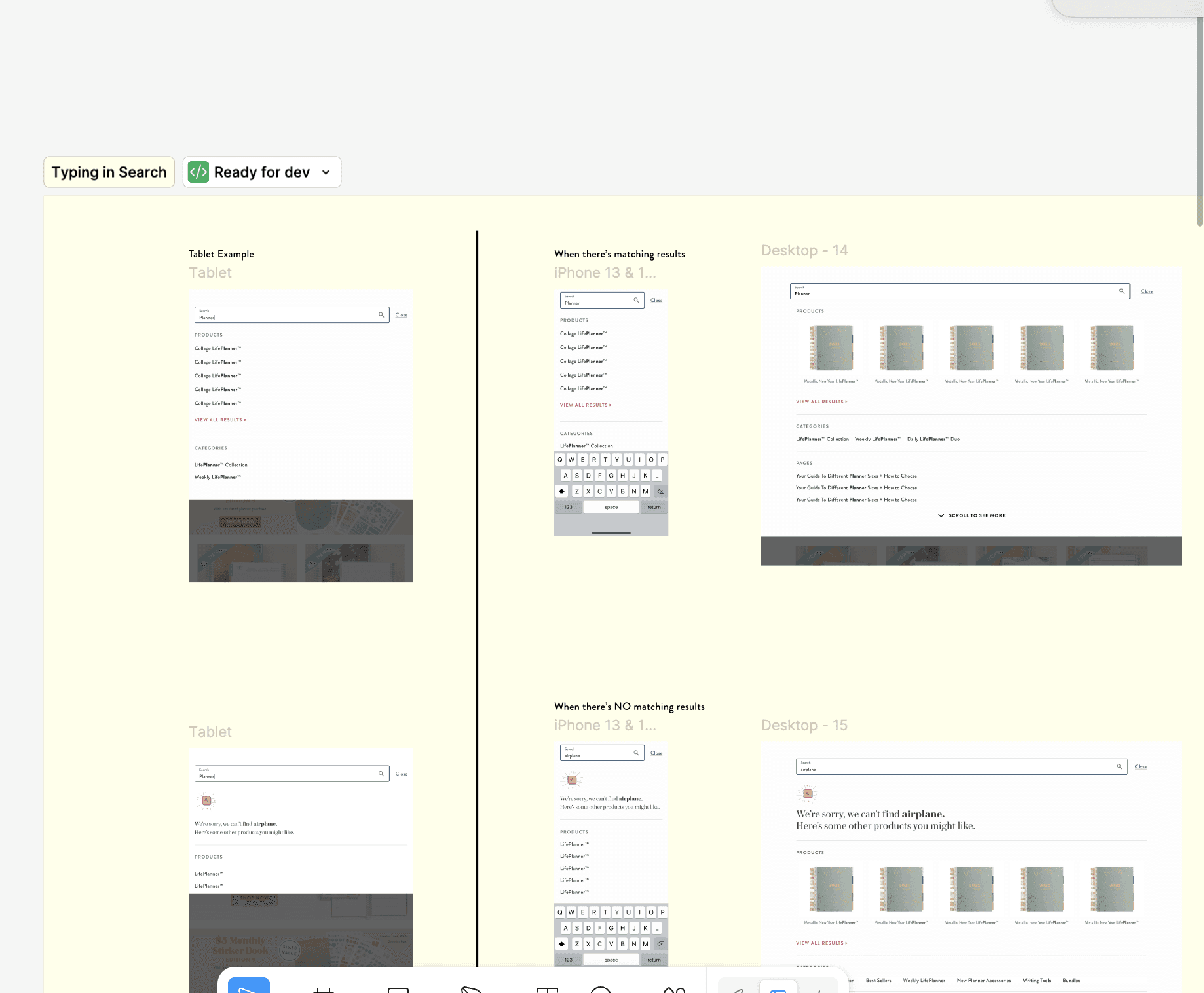
Detailed Eng Handoff
Interaction specs covering loading, error states, animations, and edge cases to minimize back-and-forth during implementation.
Results & Takeaways
Launched to 100% of users following usability testing. Assessed performance after 30 days.
3x increase in searches per session 2x increase in conversion via search.
Version one of the search open experience had more features than version two. It lost. Users didn't want more options at the moment they opened search, they wanted to get to results quickly. That finding directly influenced the final design.
Competitive benchmarking shows what's possible. Testing shows what's right for your specific product and customer. Those are not the same thing, and the gap between them is exactly where bad design decisions get made.